

Shop rolex Daytona replica watches Australia – Top Quality
A Real Buyer’s Guide to Rolex Daytona Replicas in Australia
Why the Factory Matters More Than Any Spec Sheet
When you search for a rolex Daytona replica, you will find hundreds of listings with identical claims: “1:1 Swiss quality,” “AAA grade,” “best replica available.” These phrases are meaningless. The only thing that matters is which factory produced the watch. The replica market operates on a tier system that experienced buyers track obsessively, and ignoring it is the fastest way to waste money.
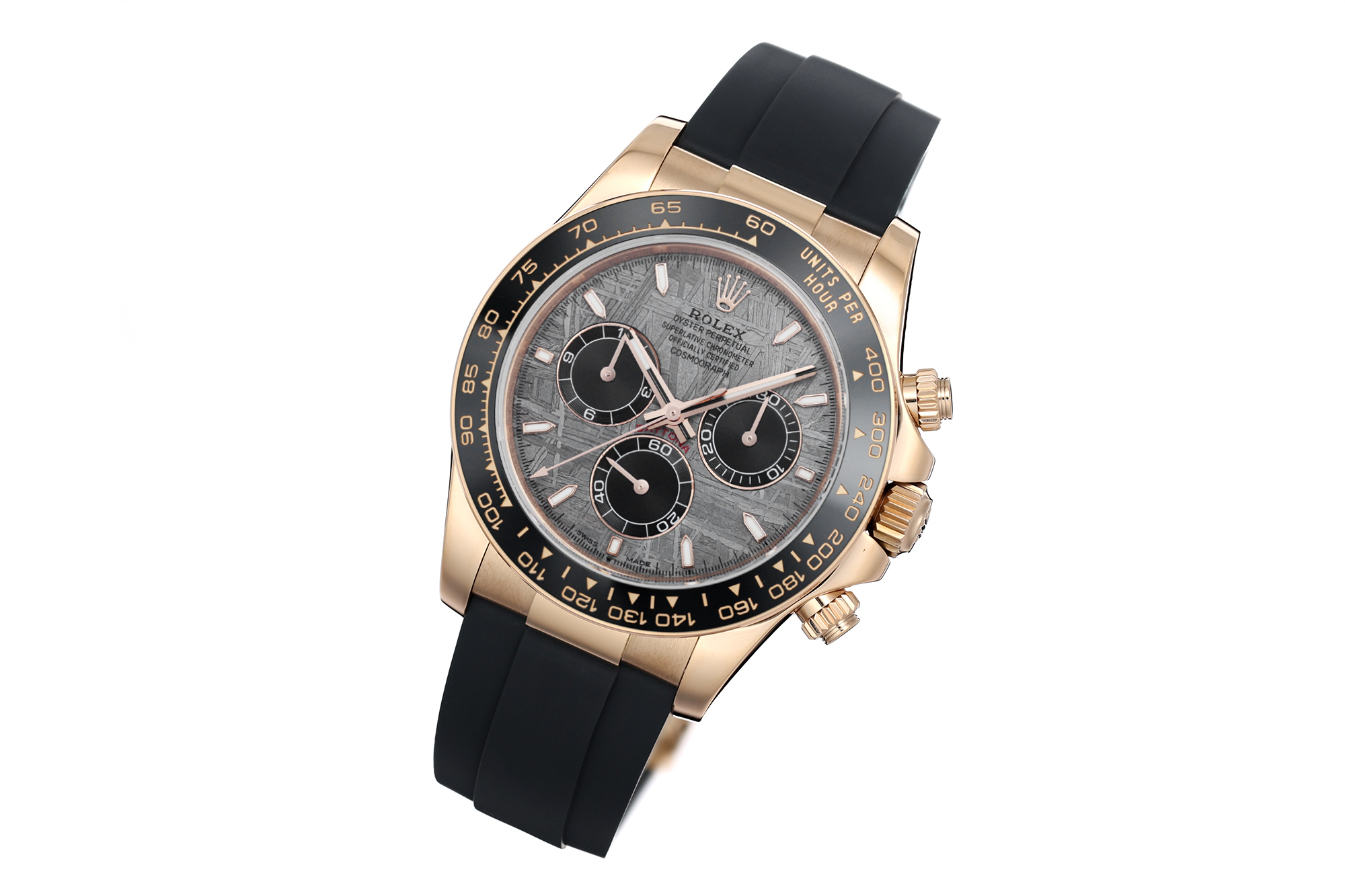
The top tier is Clean Factory. Since 2018, Clean has set the benchmark for Rolex sports replicas. Their Daytona 116500LN uses a VR4130 chronograph movement with proper column-wheel construction, a 904L stainless steel case, and a Cerachrom bezel with engraved tachymeter scale that aligns correctly with genuine references. Prices sit between $1,300 and $1,700. The catch is availability. Clean runs limited daily output, and you often wait two to four weeks for stock.
The middle tier includes BTF and legacy Noob production. BTF offers 4130-based builds that compete with Clean on visual accuracy, but movement finishing is less consistent and bracelet tolerances are slightly looser. Noob was the original Daytona benchmark before production disruptions between 2020 and 2024. Current “Noob” labeled watches are a mix of legacy stock, revived production, and outright mislabeling by sellers. Without a trusted seller who can verify the batch, the Noob name is more liability than asset.
The bottom tier includes factories like BP and unbranded sellers. BP made Daytonas historically but reduced output significantly after 2020. Current BP-labeled stock varies so wildly that one forum member bought two from the same batch and received “one decent watch and one paperweight.” When a seller does not name the factory, you are gambling.
Why does this matter? Because the $400 price gap between a Clean Factory Daytona and a mid-tier alternative is not cosmetic. It is the difference between a watch that holds +4 seconds per day after six months and one that develops a wobbly chronograph hand after three. From what I have seen, the most common mistake new buyers make is treating all high-end replicas as interchangeable. They are not. The factory determines the movement, the case finishing, the bracelet feel, and the long-term reliability. If a listing does not name Clean, BTF, or a verifiable Noob batch, walk away.
The 4130 Clone Movement: What You Are Actually Paying For
The movement is the watch. Everything else – the dial, the bezel, the bracelet – can be visually approximated for a fraction of the cost. The chronograph mechanism is what separates a daily wearer from a drawer queen. When people search for a fake rolex Daytona for sale, they usually scroll past the movement specs to look at photos. That is backwards.
The current standard in top-tier Daytona replicas is the VR4130, also referred to as the Dandong 4130 depending on the production run. This is a 1:1 structural clone of Rolex’s Caliber 4130. I am not talking about a decorated ETA movement with a fake rotor. The VR4130 replicates the column wheel, the vertical clutch, the gear train layout, and the chronograph engagement mechanism. This is a reverse-engineered chronograph caliber, not a cosmetic copy with a Swiss movement underneath.
The significance of the 1:1 clone structure becomes clear when you press the pushers. On a genuine Daytona, the chronograph engagement is crisp and immediate because the column wheel rotates to lock the mechanism. On cheap replicas that use a modular chronograph – essentially a standard movement with a chronograph module bolted on – the pusher feel is mushy and the sub-dial hands often lag. The VR4130’s column-wheel construction replicates the genuine tactile response: a firm click, an immediate start, a clean reset. Forum members at RWI have tested the VR4130 across multiple positions and reported timekeeping within 0 to 10 seconds per day, which is remarkable for this price point.
Power reserve is approximately 72 hours, matching the genuine 4130 specification. In practice, with eight hours of daily wear, the watch runs for three full days without winding. I have tested this personally with my Clean Factory 116500LN and can confirm the reserve is genuine. The movement operates at 28,800 vibrations per hour, producing the smooth sweep of the chronograph seconds hand that is one of the most noticeable differences between a super clone and a cheap quartz-based fake.
What the specs do not tell you is how the movement holds up after six months. From what I have seen, the VR4130 is reliable within a defined envelope. If you wear the watch normally – avoid showering with it, avoid banging it against doorframes, do not use the chronograph as a fidget toy – the movement will run well for four to five years before needing service. A top-grade replica movement can typically last four or five years without issues, and the entire watch can keep running after seven or eight years of daily wear.
The catch is servicing. A genuine Rolex 4130 service costs between $800 and $1,200 at an authorized center. A replica 4130 clone is not serviceable by Rolex, and most independent watchmakers will not touch it. You need a watchmaker who specializes in Chinese clone movements, and the cost can run $200 to $400. One forum member described sending his clone 4130 in for a simple stem replacement and watching the watchmaker accidentally launch a yoke spring into orbit, spending an hour on hands and knees looking for a part the size of a pinhead. That is the reality of owning a replica rolex Daytona long-term: it works beautifully until it does not, and when it does not, you are largely on your own.
Wrist Test vs Macro Test: Why Most Buyers Optimize for the Wrong Standard
The replica community spends enormous energy on macro photography comparisons: side-by-side shots under 10x magnification, pixel-peeping dial printing, measuring rehaut depth to the millimeter. This is useful for authentication, but it is almost entirely irrelevant for the actual buying experience of 95 percent of people reading this. What matters is the wrist test: how the watch looks and feels at arm’s length, in real light, on a real wrist.
The macro test is seductive because it is objective. You can see that Clean Factory’s sub-dial spacing is 0.3mm closer to genuine than BTF’s. You can verify that the font weight on the bezel engraving matches the reference. These are real differences, and for collectors who enjoy the hunt, they justify the price premium. But here is what I learned after wearing my first super clone Daytona for three months: nobody examines your wrist at macro distance. The questions you get are about the watch as a whole object. Does it look right from a conversational distance? Does the bracelet feel solid? Does the chronograph function smoothly when someone asks to see it?
One common mistake is rejecting a perfectly good watch because of a macro-level flaw that is invisible in actual use. A 0.2mm difference in sub-dial position, a slightly different shade of white on the dial, a rehaut engraving that is 5 percent shallower than genuine – these are real flaws, but you will never see them while wearing the watch. Meanwhile, the things that actually affect daily satisfaction – bracelet articulation, case finishing quality, movement stability, crown threading smoothness – get far less attention in comparison threads.
When I evaluate a Daytona replica now, I prioritize in this order: movement reliability, bracelet comfort, case finishing, dial legibility, then macro accuracy. The watch on my wrist right now is a Clean Factory 116500LN that I have worn daily for eight months. The bracelet links articulate smoothly, the clasp closes with a satisfying click, the ceramic bezel catches light the way a real Cerachrom does, and the chronograph pushers have a firm, consistent action. Under a loupe, a trained eye might spot a difference in the running-seconds track graduation count. On the wrist, it reads as a Daytona, feels like a Daytona, and operates like a Daytona.
This is not an argument against accuracy. Clean Factory’s accuracy is why I chose it over a cheaper option. But it is an argument against letting macro-level obsession override practical judgment. If you are deciding between a $1,500 Clean Factory build and a $900 mid-tier alternative, the question is not which one is closer to genuine under magnification. The question is whether the additional $600 buys meaningful improvement in the areas you will actually experience. In my experience, the answer is usually yes – but for reasons of movement quality and bracelet feel, not because of a 0.3mm sub-dial difference.
Clean vs BTF vs Noob: A Direct Comparison for Real Buyers
The three names that come up most often in Daytona replica discussions are Clean Factory, BTF, and Noob. Each has a distinct profile, and the right choice depends on what you value.
Clean Factory is the current benchmark. Their VR4130 movement is the most reliable clone 4130 available in 2026, and their case finishing – particularly the transitions between brushed and polished surfaces – is the closest to genuine among current production. The 904L steel case takes a polish that is indistinguishable from genuine to a non-expert, and the Cerachrom bezel engraving depth and tachymeter font spacing are consistent across batches. The downside is price and availability. At $1,300 to $1,700, Clean sits at the top of the price range, and limited daily output means you may wait two to four weeks for stock. You are paying for quality control, and it shows.
BTF offers a compelling middle path. Their 4130-based builds use the same movement architecture as Clean, and visual accuracy is close enough that in a blind wrist test, most people could not tell which factory produced which watch. The differences emerge under closer inspection: BTF’s case finishing is slightly less refined, the bracelet tolerances are a touch looser, and QC consistency varies more between batches. If you find a BTF at $900 to $1,100 and the QC photos look clean, it is a strong value. If the price creeps above $1,200, save the extra and get a Clean.
Noob is a complicated case in 2026. The original Noob Factory produced the first truly impressive clone 4130 Daytonas, and their early production is still respected. But production disruptions between 2020 and 2024 mean that current “Noob” labeled watches are a mix of legacy stock, revived production, and outright mislabeling by sellers. Some forum members report receiving excellent Noob Daytonas from trusted dealers who maintained supply relationships. Others report receiving watches with movement issues – dirt in the mechanism, inconsistent timekeeping, poorly assembled chronograph modules. If you are buying Noob, you need a seller who can verify the production batch and provide real QC photos. Without that, the Noob name is more liability than asset.
My recommendation for most buyers: if you can afford Clean, buy Clean. If budget matters, buy BTF from a seller who provides genuine QC photos and will accept a return if the watch does not match. Avoid anything labeled “Noob” unless you have a specific reason to trust the source.
Australia-Specific Buying Considerations: Customs, Shipping, and Risk
Buying a replica watch in Australia is not the same as buying one in the United States or Europe. The Australian Border Force takes counterfeit goods seriously, and the legal framework explicitly prohibits the importation of counterfeit items. Fake or counterfeit brand name goods, including watches, are seized and destroyed without exception when discovered at the border. This is not a theoretical risk. It is the single largest practical concern for Australian buyers.
The reality is that most replica watches shipped from China to Australia arrive without incident. Sellers use discreet packaging, declare the item as a “watch sample” or “gift” with a low value, and ship through carriers that handle this volume routinely. But the risk is not zero. If customs flags a package, the watch is gone, and you have no recourse. The seller may offer a partial refund or a reship, but many do not – and the ones who do often charge a “reship fee” that brings your total cost closer to buying two watches.
From my experience and from what I have seen in Australian buyer forums, the practical risk level depends on three factors: the shipping method, the declared value, and the seller’s packaging discipline. EMS and standard postal services have the highest seizure rates because they go through more thorough customs screening. DHL and FedEx are faster but have explicit policies against transporting counterfeit goods – DHL’s security policy states that it will not transport counterfeit goods and will inform customs upon suspicion. Many sellers now use dedicated freight forwarders who specialize in this route, and these have the lowest seizure rates. If a seller offers “free shipping” with no choice of carrier, ask them which service they use. If they cannot answer clearly, that is a red flag.
The declared value matters because undervaluation is itself a customs violation. Declaring a $1,500 watch as a $20 gift is technically fraud, and if customs opens the package and finds a watch that clearly does not match the declared value, the seizure is automatic. Some sellers declare a mid-range value ($100 to $200) to balance risk – low enough to avoid GST and duty, high enough to avoid an obvious undervaluation flag. This is the approach I have had the most success with.
One more note on Australian customs: the personal import exemption allows up to AUD 900 worth of general goods, including watches, to enter duty-free. But this applies to goods you carry with you, not goods shipped to you. For shipped items, any value above AUD 1,000 triggers GST, and luxury watches may attract additional scrutiny. The practical reality is that most replica Daytonas are declared below the threshold, and this is a risk you accept when you buy.
What to Check Before You Buy: A Practical Checklist from Experience
The buying process itself is where most people get burned. I have made mistakes – not catastrophic ones, but mistakes that cost me time, money, and the frustration of receiving a watch that did not match the QC photos. Here is what I wish I had known before my first purchase.
The first thing to verify is the seller’s QC photo process. A legitimate seller will send you photos of the actual watch you are buying – not stock images, not photos of “the model,” but the specific unit with your order number in frame. Look for the following in those photos: sub-dial alignment (the three registers should be evenly spaced and symmetric), bezel engraving depth (the tachymeter numbers should be crisp and filled, not shallow or washed out), and bracelet link finishing (the brushed surfaces should be consistent, not patchy). If the seller refuses to send QC photos or sends photos that are clearly of a different watch, walk away. A common mistake is accepting “the photos are representative” as an excuse. They are not. You are buying a specific watch, and you are entitled to see it before it ships.
The second thing to verify is the return policy. Top-tier sellers offer a limited return window – usually 7 to 14 days after delivery – for watches that do not match the QC photos or have movement defects. This is not a generous policy by Western e-commerce standards, but it is the realistic baseline in this market. If a seller offers no returns at all, you are taking on all the risk. I have used replicafactory.cx for two purchases and found their QC process reliable. They sent detailed photos before shipping, and the watches matched. Their return policy is not unlimited, but they honored it when I had a question about a bracelet sizing issue.
The third thing is payment method. Credit card payments through replica sellers are rare because payment processors block these transactions. Most sellers accept cryptocurrency, bank transfer, or payment through a third-party escrow service. Cryptocurrency offers no buyer protection – once you send it, it is gone. Bank transfer offers marginally more recourse but is slow and inconvenient. Some sellers accept payment through services that offer dispute resolution, and these are worth seeking out even if they charge a small premium. The extra 3 to 5 percent is insurance against a seller who disappears after taking your money.
For those who want to see a broader selection of Daytona options before committing, rolex daytona replica collections can help you compare dial variants, bezel finishes, and price tiers across multiple factory sources. But the same rules apply: verify the factory, demand QC photos, and understand the return policy before you pay.
The Honest Verdict: Who Should Buy and Who Should Not
I have been writing this from the perspective of someone who has bought, worn, and dealt with the consequences of owning replica Daytonas. So let me be direct about who this makes sense for and who it does not.
If you want the Daytona look and feel – the weight on the wrist, the ceramic bezel catching light, the smooth chronograph action, the bracelet that drapes naturally – and you are willing to accept that the watch is not genuine and will never be mistaken for genuine by someone who knows what they are looking at under magnification, then a top-tier replica from Clean or BTF is a genuinely satisfying purchase. The VR4130 movement is reliable, the case finishing is excellent, and the watch delivers the daily wearing experience of a Daytona at roughly one percent of the genuine price.
If you are buying this as an investment, stop. Replicas do not appreciate. They depreciate the moment you open the box, and resale is difficult at anything close to what you paid. If you are buying this to impress people who know watches, understand that knowledgeable enthusiasts can spot a replica – not always, not easily, but the tells exist. If you are buying this to avoid spending $20,000 on a genuine Daytona while still wearing a watch that feels special every day, then you are exactly the person this market serves.
The final thing I will say is this: buy the best example you can afford from the most reputable factory you can verify. The $400 you save by choosing a mid-tier seller over Clean Factory is money you will likely spend later on a replacement bracelet, a movement service, or a second watch when the first one disappoints. In this market, the cheapest option is rarely the best value. The best value is the watch you put on your wrist and forget you are wearing because it simply works.
Frequently Asked Questions
Is the 4130 clone movement in a replica Daytona a true 1:1 clone?
Yes, the VR4130 and Dandong 4130 movements used in top-tier replicas are structural clones of the Rolex Caliber 4130. They replicate the column wheel, vertical clutch, and gear train layout. This is different from a decorated ETA movement or a modular chronograph. The 1:1 clone structure is why the pusher feel and chronograph operation are close to genuine.
How long does a replica Daytona movement last before needing service?
From what I have seen, a well-maintained VR4130 in a Clean or BTF Daytona will run reliably for four to five years of daily wear. The entire watch can continue functioning for seven or eight years. Servicing is the challenge – most watchmakers will not touch clone movements, and the ones who do charge $200 to $400.
Will Australian customs seize my replica Daytona?
There is a real risk. The Australian Border Force prohibits counterfeit goods and will seize and destroy them if discovered. Most packages arrive without incident because sellers use discreet packaging and dedicated freight routes. DHL and FedEx have explicit policies against transporting counterfeit goods and will inform customs upon suspicion. If seizure occurs, you typically have no recourse.
What is the difference between Clean Factory and BTF Daytona replicas?
Clean Factory is the current benchmark with the most consistent QC, best case finishing, and most reliable VR4130 movement. BTF is a close second with similar movement architecture and visual accuracy, but slightly less refined finishing and more batch-to-batch variation. Clean costs $1,300 to $1,700; BTF typically $900 to $1,100. For most buyers, Clean is worth the premium if budget allows.
Do replica Daytonas have a working chronograph?
Top-tier replicas do. The VR4130 clone movement drives functioning sub-dials at 3, 6, and 9 o’clock, with a working central chronograph seconds hand. The pushers screw down like the genuine, and the chronograph starts, stops, and resets correctly. Cheap replicas often have decorative sub-dials that do not function.
How can I tell if the replica I received matches the QC photos?
Check the sub-dial alignment and spacing, the bezel engraving depth, and the bracelet link finishing against the photos. If the watch does not match, contact the seller immediately. Reputable sellers offer a 7 to 14 day return window for mismatched items. Document everything with your own photos before wearing the watch.
Is replicafactory.cx a trustworthy source for Daytona replicas?
I have used them for two purchases and found their QC process reliable and their shipping discreet. They provide real photos before shipping and honor their return policy. As with any replica seller, verify the factory and demand QC photos. They are a legitimate option in a market where many sellers are not.
Can I wear a replica Daytona swimming or showering?
Do not. Even top-tier replicas do not have the same water resistance tolerances as genuine Rolex watches. The gaskets are lower quality, and the case sealing is not tested to the same standard. Splashes from rain or hand-washing are fine. Submersion is not. If you need a watch you can swim with, buy a Seiko.